
I love a good spy thriller, especially when nobody seems entirely sure who they can trust and every character has at least three different reasons for lying to somebody.
That's the kind of movie Ryoo Seung-wan delivers with HUMINT (2026), a South Korean action thriller that combines international espionage, human trafficking, North and South Korean intelligence officers and some absolutely fantastic action sequences.
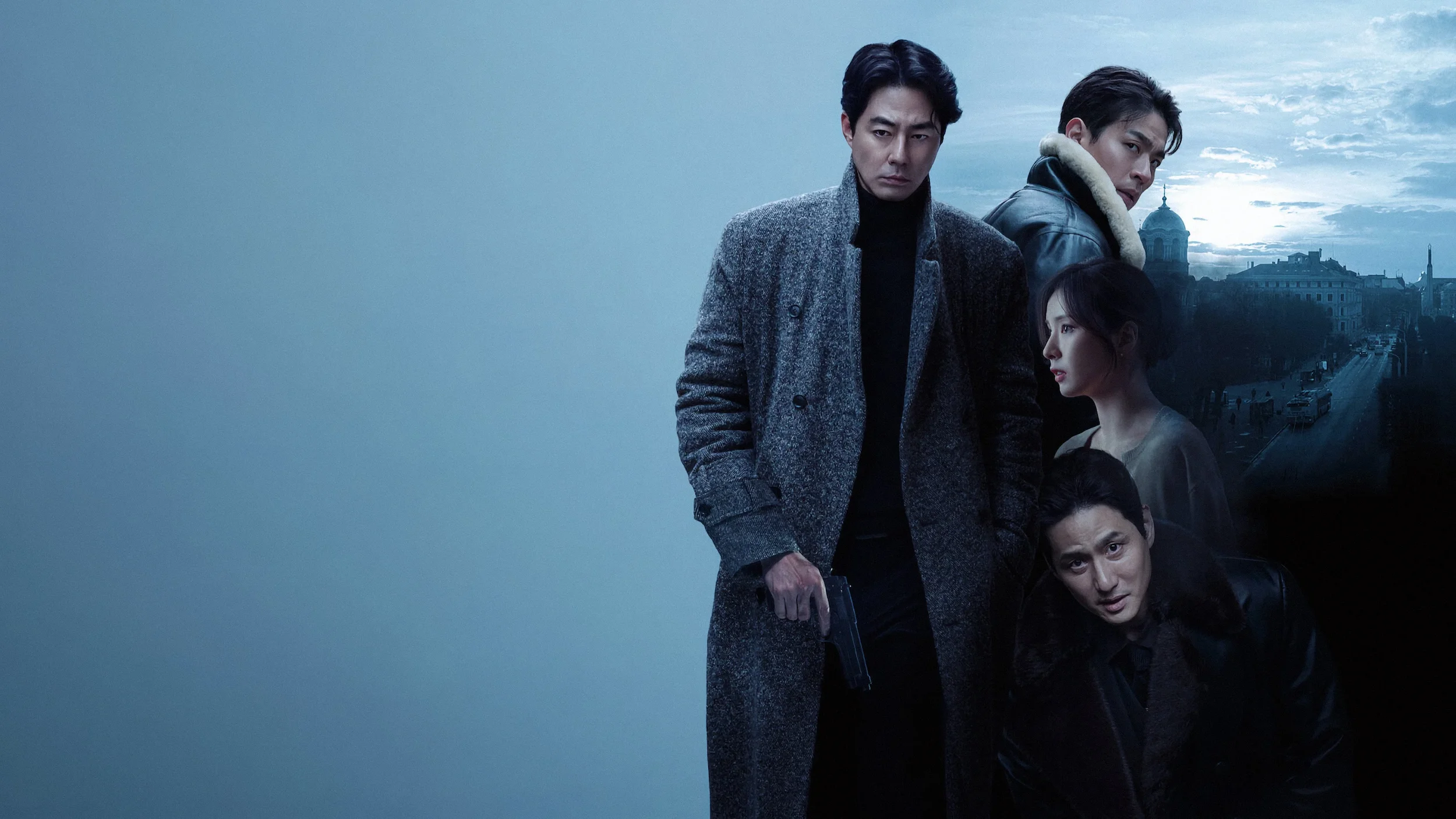
Zo In-sung plays Cho, a South Korean intelligence officer investigating a criminal operation in Vladivostok, Russia. His investigation brings him into conflict with Park Geon, a North Korean security officer played by Park Jeong-min. Both men become entangled with a woman named Seon-hwa, played by Shin Se-kyung, whose situation gradually complicates their missions.
It's a terrific setup for a spy thriller, but the biggest surprise for me was just how impressive the action becomes.
Here are five things about HUMINT that make it worth watching.
Watch the HUMINT Video
5 Things About HUMINT That Make It Worth Watching
#5: It's an Exciting Spy Thriller Where Nobody Can Be Trusted
The best spy thrillers understand that gathering information is only half the job. The other half is figuring out whether anybody is telling you the truth. HUMINT has plenty of that.
The title itself is an intelligence term meaning human intelligence, referring to information gathered from people rather than technological surveillance. It's an appropriate title for a movie where nearly every important development depends on somebody trusting the wrong person, deciding to cooperate or realizing they've become expendable.
Cho is investigating an international criminal organization involved in drugs and human trafficking when he crosses paths with Park Geon, a North Korean security officer conducting an investigation of his own. Their interests overlap, but that doesn't mean they're working together.
Meanwhile, corrupt officials and Russian criminals are pursuing their own agendas, and Seon-hwa finds herself caught in the middle of a situation where being useful to somebody might be the only thing keeping her alive.
What I particularly appreciate is that HUMINT doesn't simply present South Korea as the good guys and North Korea as the bad guys. Both central agents are capable at their jobs, both are operating within institutions that demand obedience and both eventually have to consider whether completing their missions is more important than protecting the people affected by them. The story isn't particularly complicated, but it doesn't need to be.
If you enjoy the Bourne movies, Atomic Blonde or espionage thrillers built around shifting loyalties, HUMINT has plenty to offer.
#4: Zo In-sung and Park Jeong-min Are Terrific Opposing Leads
One of the smartest decisions Ryoo Seung-wan made was building the film around Zo In-sung and Park Jeong-min.
The director previously worked with both actors on Smugglers (2023), and he has explained that his experience working with them made him want to create another movie specifically designed to showcase their abilities. That decision pays off.
Zo plays Cho as an experienced, relatively measured intelligence officer who understands that people are often more valuable alive and cooperative than beaten into submission. Park Geon, meanwhile, is considerably more intense. He's exceptionally capable, but there's something volatile about him that makes his presence intimidating even when he isn't physically threatening anybody.
What I like about the relationship is that these aren't simply two tough guys competing to see who's better at their job. They represent different approaches to intelligence work, different obligations and different ideas about what loyalty actually means. And while the two men certainly have their moments, I also want to give credit to Shin Se-kyung as Seon-hwa. She's an important part of the story's emotional foundation, and the movie gives her more to do than simply wait around for one of the male leads to rescue her.
Park Hae-joon is also effective as Hwang Chi-seong, a North Korean official whose position and personal ambitions make an already dangerous situation considerably worse. It's an excellent ensemble, and the performances keep the movie engaging even when the script needs to pause for a little espionage exposition.

#3: Ryoo Seung-wan Continues to Be One of Korea's Most Dependable Action Directors
If you've been following South Korean action cinema for a while, you're probably already familiar with Ryoo Seung-wan. He's directed movies like The City of Violence, Veteran, Smugglers and Escape from Mogadishu, and he's developed a reputation for staging elaborate action sequences without losing sight of the characters involved.
HUMINT is another excellent example of why that reputation is deserved.
The film is also the third entry in what has been described as his unofficial overseas-location trilogy, following The Berlin File (2013) and Escape from Mogadishu (2021). All three movies take Korean characters and place them in dangerous situations outside their home country, with the foreign settings contributing to the atmosphere and complications of the story. There's even a little Easter egg connecting HUMINT directly to The Berlin File. During a conversation, a character references Pyo Jong-seong, the North Korean agent played by Ha Jung-woo in the earlier film. Ryoo has confirmed that the reference was intentional, providing a small reward for people familiar with his earlier work.
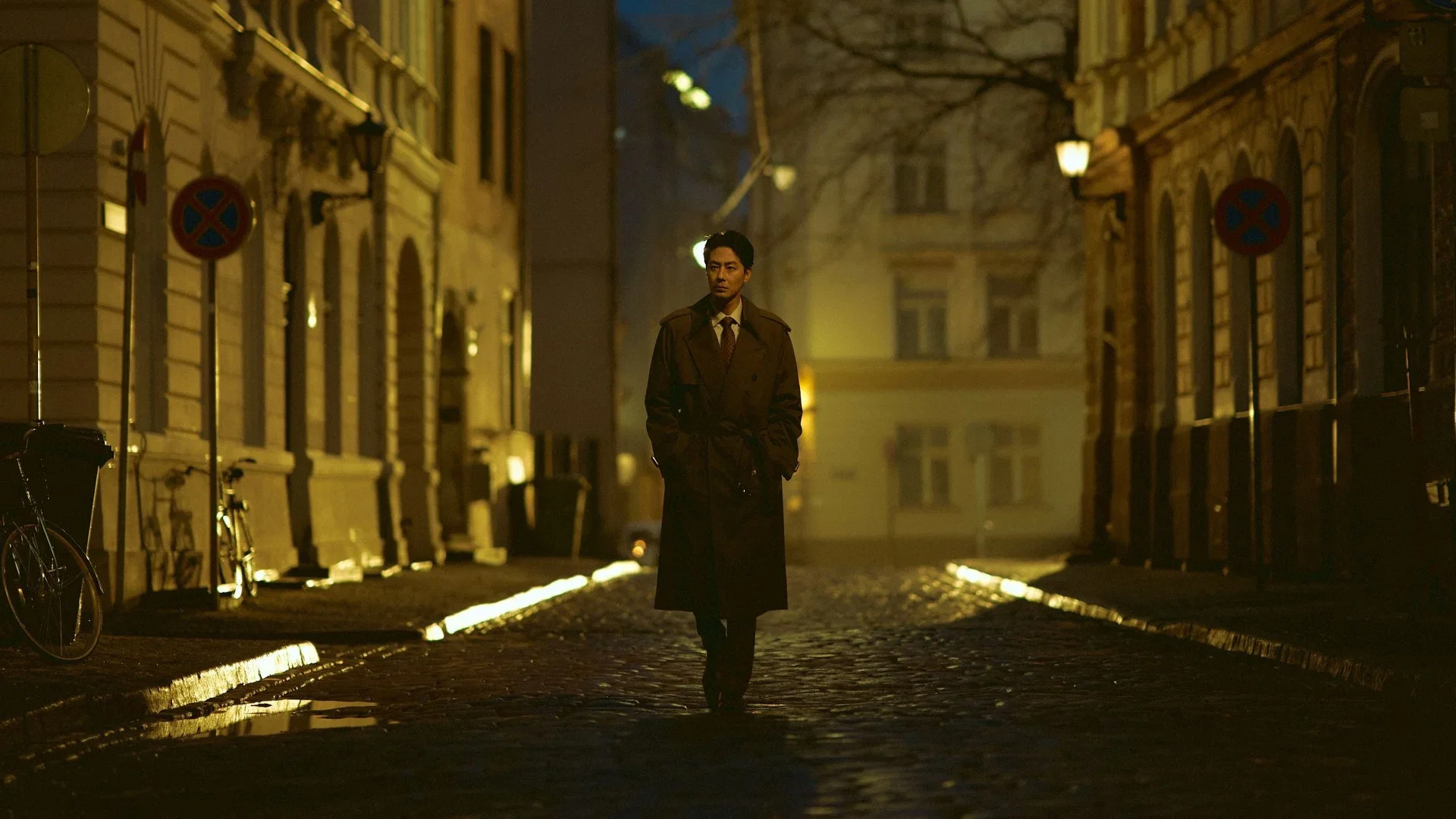
Another interesting production detail is that HUMINT wasn't actually filmed in Vladivostok. Much of the production took place in Riga, Latvia, which stood in for the Russian city. The filmmakers reportedly spent months scouting suitable locations, and the cold European streets give the movie a convincing sense of place.
What impressed me most, though, was the confidence of the direction. Ryoo doesn't rely on unnecessary visual flourishes to convince us that something exciting is happening. He trusts the actors, the locations and the choreography to carry the tension. That's a quality I always appreciate in an action director.
#2: The Hand-to-Hand Combat Looks Genuinely Painful
I love a good movie fight, but one thing that always drives me crazy is when filmmakers hire talented performers and then edit the entire sequence so aggressively that you can barely see what they're doing. HUMINT largely avoids that problem. There's an early fight where Cho absolutely demolishes a group of thugs, and it immediately establishes the kind of physical violence we're going to see throughout the movie. The camera gives the performers enough room to move, the choreography is clearly visible and the impacts look like they actually hurt. It's a refreshing change from action movies that seem determined to hide every punch behind a camera shake or another edit.
But my favorite hand-to-hand fight comes later, during a brutal confrontation in a stairwell between Park Geon and Assistant Manager Im, a South Korean intelligence officer played by Jung Eu-gene. It's a fantastic sequence. The two characters throw themselves around the narrow space, bouncing off walls, railings and stairs in a fight that looks absolutely exhausting.
There's also a terrific behind-the-scenes story about how the scene came together. According to Park Jeong-min, some of the Latvian stunt performers were initially cautious about the level of physicality expected of them. Ryoo Seung-wan responded by throwing himself down the stairs to demonstrate exactly what he wanted. Apparently that was enough to convince everybody. Once the stunt performers understood the intensity the director was looking for, they embraced the approach and even started requesting additional takes.
I don't know how anybody walks away from a scene like this without needing several days to recover, but I'm glad they were willing to put in the work. It's some of the most impressive close-quarters action I've seen this year.
#1: The Final Shootout Is Absolutely Incredible
As much as I enjoyed the hand-to-hand combat in HUMINT, the biggest reason I'd recommend it is the enormous shootout that dominates a significant portion of the film's final half hour. I have a special appreciation for movies that are willing to commit to an extended gunfight. Think about the hospital sequence in John Woo's Hard Boiled, the street shootout in Michael Mann's Heat or the climactic battles in Extreme Prejudice and The Wild Bunch. Those scenes aren't simply there to move the story from one plot point to another, they're elaborate pieces of filmmaking that require the geography, choreography, camera placement, sound and editing to work together while absolute chaos unfolds. If any one of those elements fails, the entire sequence can become confusing.
HUMINT understands that.
The climactic confrontation builds into an extended exchange of gunfire that gives the characters plenty of opportunities to demonstrate their skills while maintaining a clear sense of where everybody is and what they're trying to accomplish. It's loud, violent and incredibly satisfying. Just when you think the sequence might finally be over, the action continues outside on a smaller scale, and that final stretch reminded me of The Way of the Gun, one of my favorite crime movies.
I won't spoil the specifics because part of the enjoyment comes from watching the situation develop and understanding how the characters maneuver through it, but I will say that Ryoo Seung-wan has delivered the kind of action climax that makes me want to immediately rewind the movie and watch the entire thing again.
If you appreciate carefully staged gunfights, this is absolutely worth your time.
Who Should Watch HUMINT?
HUMINT is an easy recommendation for fans of South Korean action cinema, espionage thrillers and movies where the action choreography is every bit as important as the plot.
If you enjoy The Bourne Identity, Atomic Blonde, The Berlin File, The Raid, Heat or The Way of the Gun, there's a good chance you'll appreciate what Ryoo Seung-wan is doing here.
It's also a great introduction to his filmmaking if you haven't explored his earlier work. The action is exciting enough to work on its own, but there's enough character drama and political intrigue to keep the story from becoming one extended fight scene.
Just be aware that the film deals with human trafficking, corruption and some pretty brutal violence. It isn't particularly subtle, but I don't think it needs to be.
Sometimes an exciting spy story, excellent performers and a few extraordinary action sequences are more than enough.
Where to Watch HUMINT (2026)
HUMINT premiered in South Korean theaters on February 11, 2026 and began streaming internationally on Netflix on March 31.
The film is currently available to stream in the United States on Netflix, with Korean-language audio, English subtitles and an English dub.
Own HUMINT on Physical Media
I haven't verified an announced U.S. Blu-ray or 4K UHD edition of HUMINT yet. If a suitable release becomes available, this would be an excellent movie to revisit on physical media, particularly for the sound and detail of the final shootout.
For now, Netflix is the easiest way for American viewers to check it out.
Prefer to Listen?
You can also hear this Force Five recommendation as a podcast episode covering the same five things about HUMINT, from the complicated relationship between its two lead agents and Ryoo Seung-wan's filmmaking to the absolutely brutal stairwell fight and spectacular final gunfight.
HUMINT on the Force Five Top 5 Radar
Top 5 Staircase Fights
I could probably put together an entire video about great movie staircase fights, because there's something about forcing characters to battle on uneven ground that seems to bring out the best in action filmmakers. HUMINT would absolutely be on my list. The fight between Park Geon and Assistant Manager Im is brutal, creative and full of the kind of physical commitment that makes me appreciate excellent stunt performers.
It deserves to be mentioned alongside the stairwell action in The Bourne Identity and Atomic Blonde, both of which demonstrate how a narrow, unforgiving location can make a fight considerably more interesting. There's apparently no such thing as a safe staircase in an action movie.
More Force Five
If the close-quarters martial arts are what you enjoyed most about HUMINT, Force Five's review of Wings of Dread (2026) is an excellent next stop. Ashton Chen and The Raid star Iko Uwais face off aboard a hijacked airplane, with some fantastic fights in its cramped passenger cabin and cargo hold. It's a much simpler movie than HUMINT, but both understand the importance of letting talented performers do their work inside the frame.
For another movie featuring an enormous climactic shootout, Extreme Prejudice (1987) is an easy recommendation. Walter Hill's modern Western stars Nick Nolte, Powers Boothe and Michael Ironside in a story that builds toward a spectacular confrontation involving criminals, soldiers and one very determined Texas Ranger. If the final gunfight in HUMINT reminded you of classic action cinema, there's a good chance you'll enjoy this one.
If you'd rather see another recent action movie with a collection of dangerous adversaries, Onslaught (2026) provides a completely different kind of experience. Adam Wingard's action-horror thriller pits Adria Arjona against genetically engineered super-soldiers, combining slasher-movie violence with military action. It isn't an espionage thriller, but it shares HUMINT's enthusiasm for physical combat and increasingly elaborate confrontations.
And for more ambitious contemporary Asian action filmmaking, Blades of the Guardians (2026) offers another opportunity to watch a talented director and an enormous collection of skilled performers go to work. Yuen Woo-ping's martial arts adventure features Wu Jing, Nicholas Tse and Jet Li in a series of inventive fights across a beautifully realized historical landscape. It's a very different setting from the cold streets of Vladivostok, but both movies have a great deal of respect for the craft of action choreography.
