
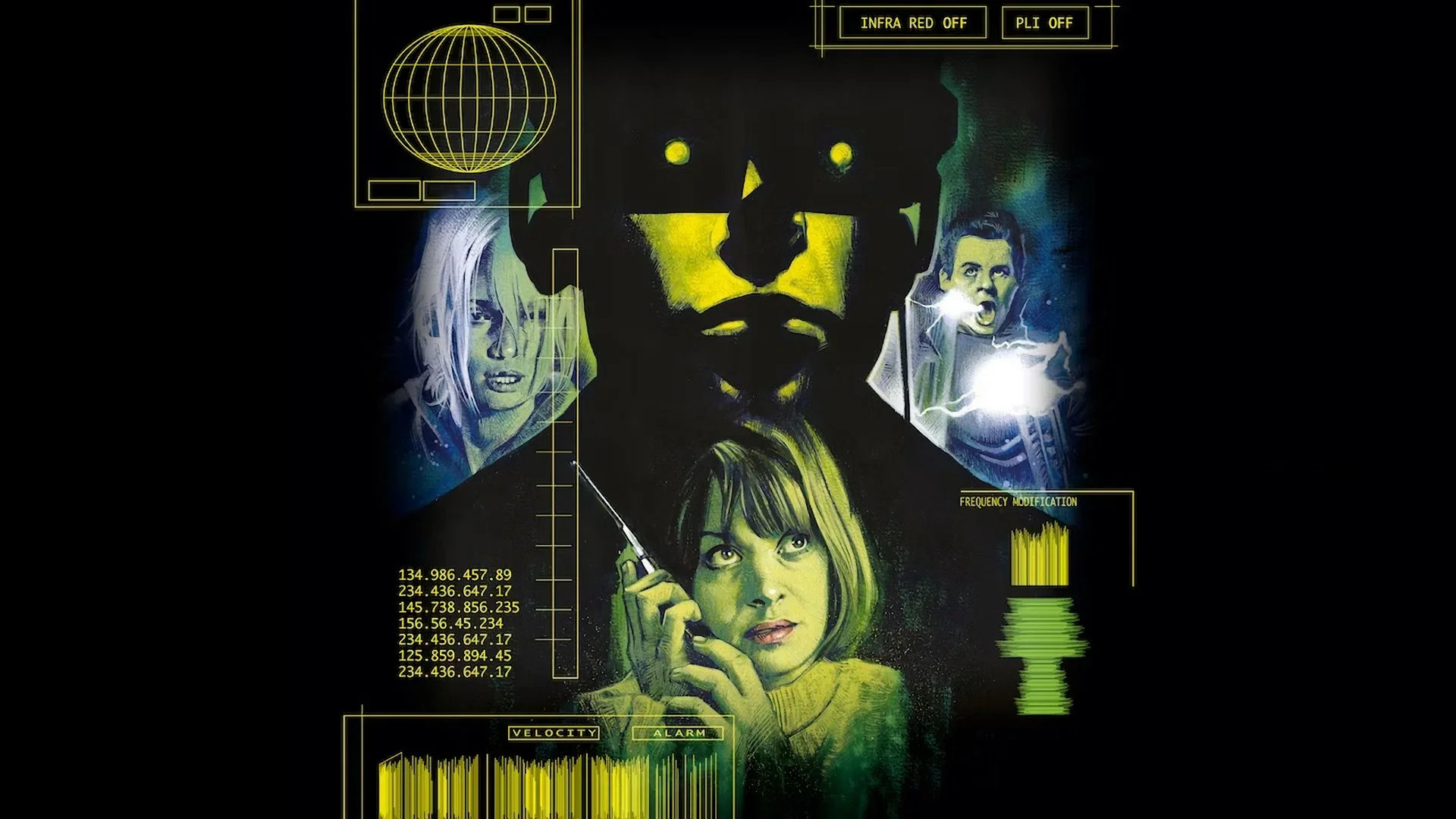
There was a brief period in movie history when Hollywood seemed absolutely convinced that the internet was going to kill us all. Hackers could take over anything, websites appeared to have unlimited computing power and logging into the wrong chat room was basically the equivalent of walking into a dark alley in the worst part of town. Nico Mastorakis's .com for Murder might be one of the most entertaining artifacts of that particular era.
Starring Nastassja Kinski as Sondra, a woman recovering from a skiing accident who becomes convinced she's encountered a murderer online, the film combines Hitchcock-inspired suspense with early internet paranoia, questionable technology and an absolutely bizarre supporting cast that includes Roger Daltrey and Huey Lewis.
It's ridiculous, frequently dated and completely fascinated with the possibilities of the World Wide Web. Here are five reasons you might want to watch it.
5 Reasons to Watch .com for Murder
#5: Roger Daltrey and Huey Lewis Are Somehow Both in This Movie
I'm always amused when musicians unexpectedly appear in movies, especially when the movie has absolutely nothing to do with music. .com for Murder gives us two pretty significant rock stars.
First up is Roger Daltrey, lead singer of The Who, playing Ben, Sondra's partner and the owner of a ridiculously elaborate computerized house. Ben is an architect who might not be completely honest about what he's doing in certain online chat rooms, and Daltrey approaches the role with the seriousness of a man who probably wasn't expecting to spend his weekend explaining the internet to Nastassja Kinski. Daltrey has a surprisingly extensive acting career, particularly on television, but seeing him turn up in something like this is still entertaining.
Then there's Huey Lewis, lead singer of Huey Lewis and the News, playing FBI agent Matheson. I'm a huge fan of the band, so seeing Lewis in just about anything makes me happy. Getting to watch him explain computer encryption to people is an unexpected bonus.
The two musicians don't turn the movie into a comedy, but their presence gives it a peculiar sort of charm. It's exactly the kind of casting that makes you wonder how the conversation went when their agents first received the scripts.
#4: The Early Internet Technology Is Gloriously Ridiculous
If you're fascinated by the way movies depicted the internet before everybody had a smartphone, .com for Murder is like discovering a long-lost GeoCities page.
Sondra is recovering from an injury while Ben leaves for a business trip, giving her plenty of time to explore his incredibly advanced home computer. Naturally, the computer is named HAL, because apparently nobody in this movie has seen 2001: A Space Odyssey. HAL controls the house, responds to voice commands and has enough personality that I wouldn't be particularly surprised if it started offering relationship advice.
Sondra and her friend Misty eventually log into American Love Online, a chat service where they encounter a suspicious user named Werther. They begin to suspect he's responsible for a murder, which leads to increasingly elaborate displays of computer technology that seem to operate according to rules invented specifically for this screenplay.
There are bizarre Windows-era graphics, dual monitors, animated messages and a murderer wearing virtual-reality goggles while broadcasting his crimes. Some of the technology is almost hilariously primitive by modern standards, while other aspects, including voice-controlled homes and online broadcasts, feel surprisingly familiar. The movie doesn't necessarily understand how the internet works, but it certainly has some ideas about what the internet might become.
#3: It's a Perfect Time Capsule of Early-2000s Filmmaking
The computer technology isn't the only thing that dates this movie. There was a particular visual style popular around the turn of the millennium that .com for Murder embraces with absolutely no hesitation. The opening sequence features frantic editing, bright flashing colors, techno music and the kind of aggressively stylized imagery that looks like it should be playing on a television mounted above the bar in a nightclub sometime around 2001. I used to find this filmmaking style irritating, but there's something strangely nostalgic about it now. Movies like Swordfish, feardotcom and even the slightly earlier Hackers shared a fascination with taking things that were fundamentally not cinematic, like people typing on keyboards, and making them look like the most dangerous activities imaginable.
.com for Murder also plays around with first-person camera perspectives and degraded digital footage. It arrived shortly after The Blair Witch Project demonstrated how effective supposedly amateur footage could be for horror, and Mastorakis seems determined to incorporate whatever visual techniques might make his cyber-thriller feel contemporary. Some of it has aged terribly, but that's also part of the appeal.
Watching .com for Murder now feels like opening a time capsule from a period when movies were still trying to figure out what being online was supposed to look like.
#2: It's Basically Rear Window, but Through Windows
Here's something that took me about ten minutes to realize.
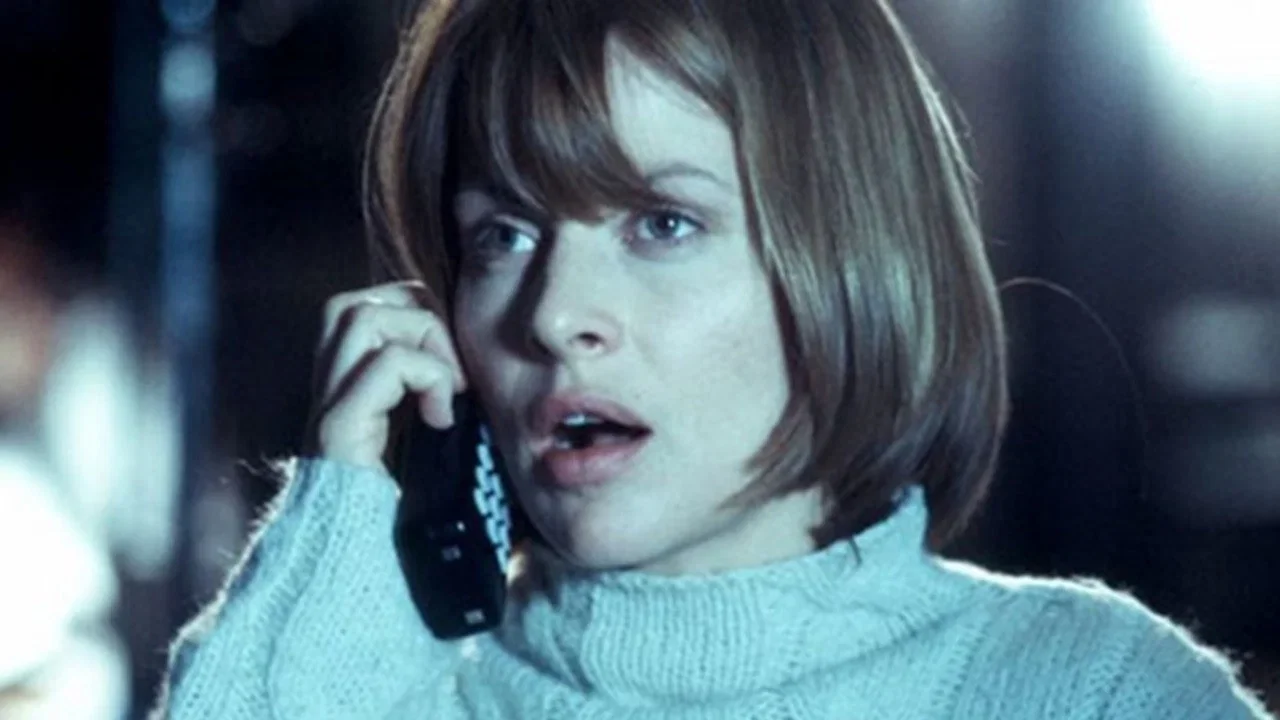
Despite having a title that sounds like an obvious reference to Dial M for Murder, .com for Murder owes much of its actual premise to Alfred Hitchcock's Rear Window. In Hitchcock's 1954 classic, Jimmy Stewart plays a photographer confined to his apartment with a broken leg. With nothing else to do, he starts watching his neighbors through his window and becomes convinced he's witnessed a murder.
In .com for Murder, Nastassja Kinski plays a woman recovering from a leg injury who starts watching strangers through…Windows. Instead of staring across an apartment courtyard, she's communicating with people through computer monitors and chat rooms. What begins as casual entertainment gradually becomes a potentially deadly obsession, and the protagonist's limited mobility makes her especially vulnerable when the danger gets closer to home.
It's an interesting attempt to update Hitchcock's premise for an era when technology was changing the way people interacted with strangers. There are considerably better Hitchcock-inspired movies. Disturbia takes the Rear Window concept and adapts it into a more coherent modern thriller, while A Perfect Murder reimagines Dial M for Murder with a contemporary setting. And of course, Hitchcock himself remade The Man Who Knew Too Much. .com for Murder isn't anywhere near that level, but I appreciate the attempt to bring an established suspense formula into a completely different technological environment.
#1: Werther Is a Ridiculous but Entertaining Serial Killer
There was a period in the 1990s when movie serial killers apparently couldn't just murder people. They needed a theme. John Doe in Se7en structures his murders around the seven deadly sins. The murderer in Copycat recreates famous serial-killer crimes. Hannibal Lecter has an entire personality built around intelligence, sophistication and a fairly unusual diet. Then…there's Werther.
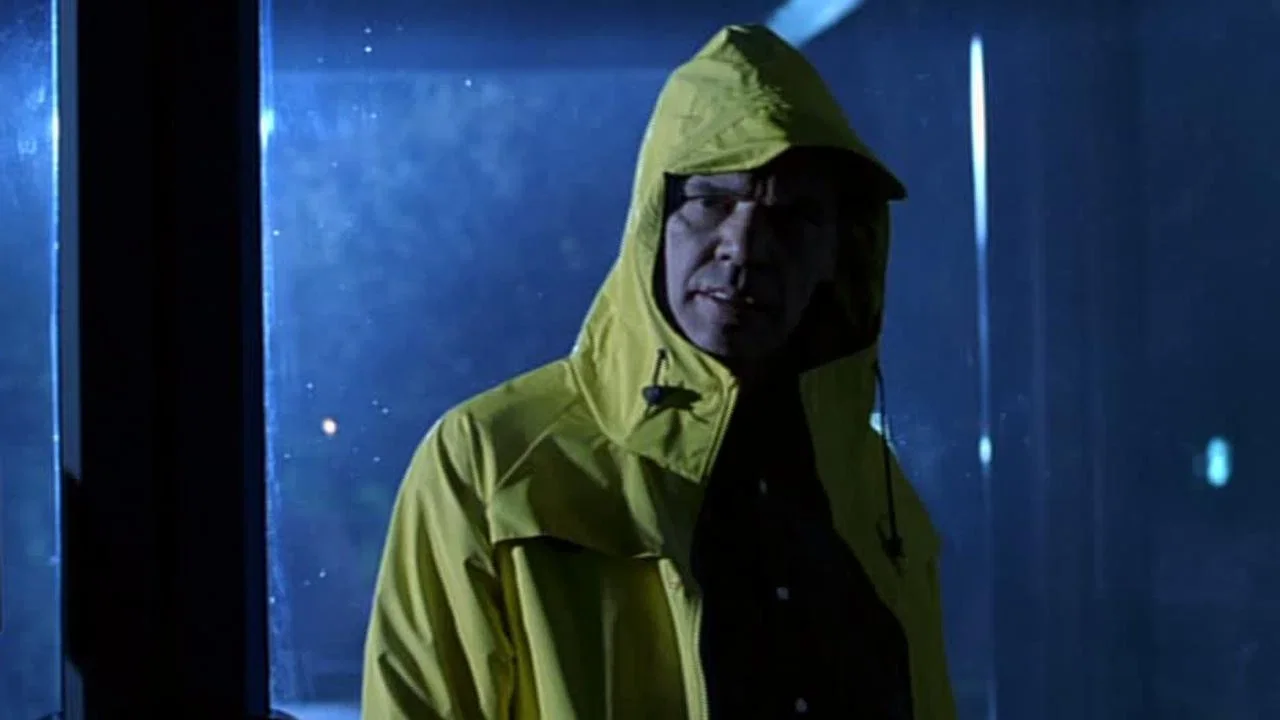
Played by Jeffery Dean, Werther is an online predator who enjoys voyeurism, murder, computer hacking and quoting Johann Wolfgang von Goethe. His name is even a reference to Goethe's The Sorrows of Young Werther. He uses webcams, knives, virtual-reality technology and laser pointers while treating the internet like his personal hunting ground. He's the kind of villain who probably thinks quoting German literature in the middle of threatening somebody makes him significantly more sophisticated.
It doesn't, but it does make him entertaining. Werther belongs to that era when screenwriters were desperately trying to create the next elaborate cinematic serial killer, giving their villains increasingly specific interests and methods so they'd stand out from the competition. He's not remotely as frightening as John Doe or Hannibal Lecter, but his combination of literary pretension, ridiculous technology and unchecked confidence makes him a memorable addition to the genre.
Who Should Watch .com for Murder?
.com for Murder is worth a look if you enjoy forgotten techno-thrillers, early internet nostalgia, Hitchcock-inspired suspense or the kind of low-budget genre movies that seemed to appear constantly on late-night cable television. Fans of Hackers, The Net, feardotcom, Virtuosity and Swordfish will probably find something entertaining here, although not necessarily for the reasons the filmmakers intended.
It's also worth checking out if you're interested in Nico Mastorakis' distinctive brand of B-movie filmmaking or simply want to see Roger Daltrey and Huey Lewis sharing space in a thriller about murderous chat rooms.
If you need airtight plotting or realistic depictions of computers, you're probably going to have a rough time. But if you find outdated technology, strange casting and over-the-top villains entertaining, this is a pretty fascinating little artifact.
Where to Watch .com for Murder
.com for Murder is available on Tubi as I write this and might be on Arrow’s video service and Night Flight Plus.
Watch .com for Murder free on Tubi
Check current streaming and digital rental options
Own .com for Murder on Blu-ray
Arrow Video released .com for Murder on Blu-ray in 2023, giving this forgotten techno-thriller a high-definition presentation and a surprisingly substantial collection of bonus material.
The edition includes the original making-of documentary, a newer retrospective with director Nico Mastorakis, archival interviews with Roger Daltrey and Huey Lewis, the trailer and additional artwork.
As an Amazon Associate, I earn from qualifying purchases.
Prefer to Listen?
You can also hear this Force Five recommendation as a podcast episode exploring five reasons you might enjoy .com for Murder, including its rock-star supporting cast, gloriously outdated internet technology, early-2000s filmmaking style, Hitchcock influences and one particularly ridiculous serial killer.
.com for Murder on the Force Five Top 5 Radar
Top 5 Movies That Thought the Internet Was Going to Kill Us
There was something uniquely entertaining about movies made when the internet still seemed mysterious enough that filmmakers could invent almost anything about it. Hackers, The Net, Virtuosity, feardotcom and .com for Murder all belong in the conversation. Some imagined hackers as nearly supernatural beings while others decided that going online was effectively inviting a murderer directly into your house.
The technology has aged, but the paranoia still feels familiar.
Top 5 Hitchcock Movies Reimagined for a Different Era
Hitchcock's films have inspired countless remakes and reinterpretations, but some of the more interesting attempts take the original premise and transplant it into a new technological or cultural environment.
Disturbia updates Rear Window for a suburban teenager. A Perfect Murder reimagines Dial M for Murder, while Body Double brings Hitchcockian voyeurism into a very different 1980s setting.
.com for Murder takes the idea of watching a possible crime from a distance and moves the entire situation into early internet chat rooms.
It doesn't necessarily improve on the original, but it certainly finds a novel way to interpret it.
More Force Five
If the elaborate serial-killer angle is what you enjoyed most about .com for Murder, my review of The Whisper Man (2026) is a natural next stop. James Ashcroft's thriller deliberately recalls the dark serial-killer movies of the 1990s, complete with cryptic clues, investigators trying to understand a murderer's psychology and a mystery that gradually becomes much more personal.
For another movie interested in what happens when technology allows people to watch the worst behavior imaginable, Primetime (2026) takes that idea in a much more disturbing direction. Lance Oppenheim's film explores the rise of To Catch a Predator and our uncomfortable fascination with watching strangers get caught on camera. Where .com for Murder treats online voyeurism as a ridiculous thriller premise, Primetime asks what happens when watching people becomes an entire entertainment industry.
If you enjoyed the film's early digital-video aesthetic and willingness to experiment with different camera perspectives, V/H/S/94 (2021) offers another approach to technological horror. The found-footage anthology uses deliberately degraded video, unusual camera perspectives and several wildly different horror stories to make the recording format itself part of the experience.
And for another thriller where the premise makes less and less sense the longer you think about it, Flight Risk (2025) offers Mark Wahlberg, Michelle Dockery and Topher Grace in a confined-space thriller built around a killer pretending to be something he's not. It's a different kind of movie, but viewers who enjoy picking apart questionable decisions and increasingly ridiculous situations may have just as much fun with it.
