
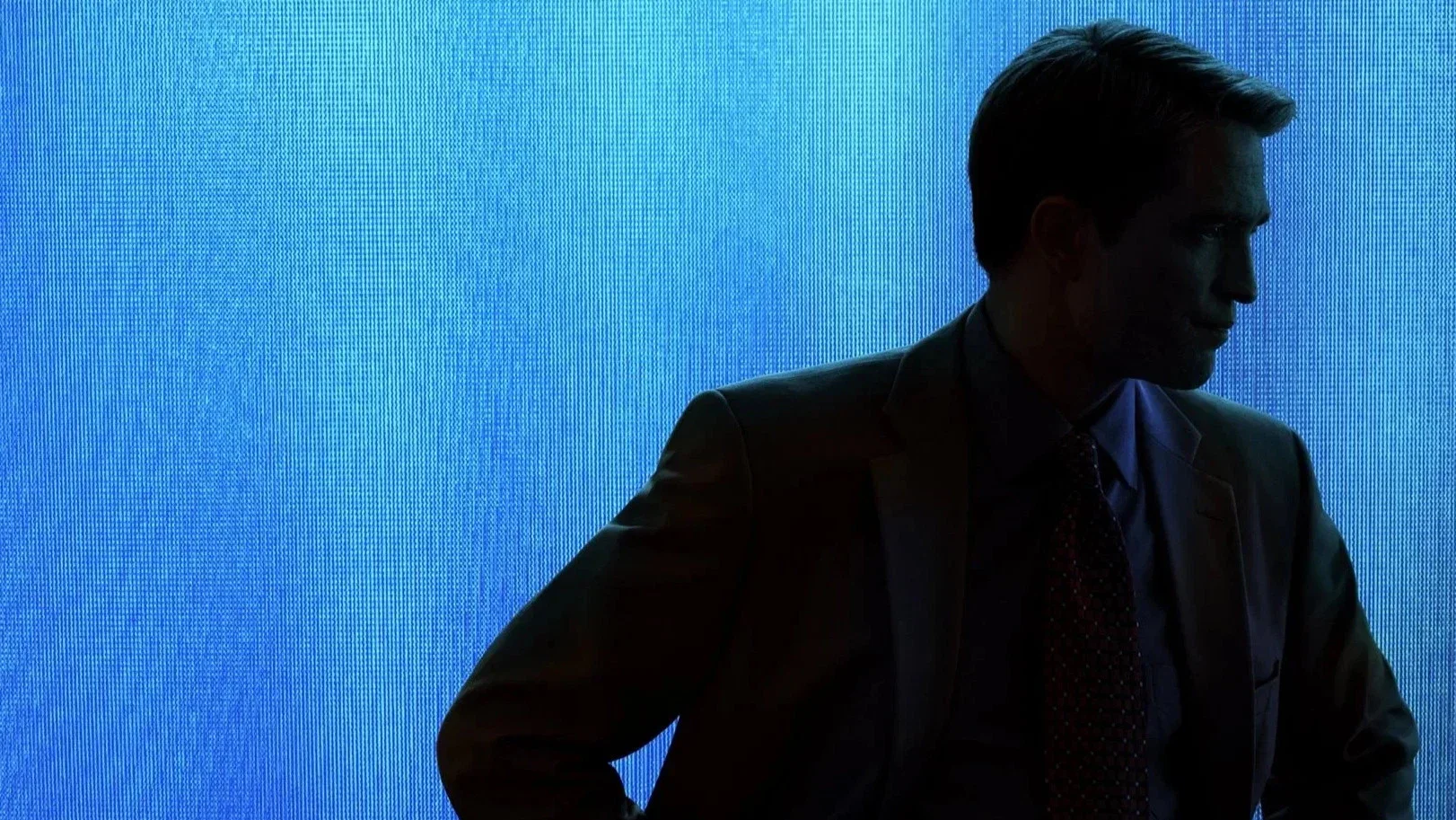
Primetime turns To Catch a Predator into something much stranger than a straightforward true-crime dramatization.
Robert Pattinson stars as Chris Hansen in Lance Oppenheim’s unsettling 2026 film about the rise of one of the defining television phenomena of the mid-2000s. But Primetime isn’t really interested in deciding whether Hansen was a hero or whether catching predators was worthwhile. It’s interested in what happened when justice became entertainment, and why millions of us enjoyed watching it.
Watch the Primetime video:
5 Reasons to Watch Primetime
5. It Turns the Camera Back on the Audience
There was a period in the mid-2000s when my friends and I would get together, crack some cheap beer and watch Chris Hansen calmly walk into a room and ask some variation of:
“What are you doing here?”
Then we'd watch someone realize that his life was about to completely fall apart on national television. And we loved it. That's the uncomfortable place where Primetime starts asking questions.
The movie isn't arguing that exposing adults attempting to meet children was somehow wrong. Instead, it asks when exposing wrongdoing starts becoming entertainment.
Those are two very different things.
To Catch a Predator arrived before everyone carried a high-definition camera and social-media distribution network in their pocket, but the appetite it tapped into feels even more familiar today. Someone can have the worst thirty seconds of their life in a parking lot and become a meme before dinner. Obviously, that's nowhere near the same moral universe as the crimes being investigated on To Catch a Predator. But the mechanism is familiar. We like spectacle and we like humiliation. We especially like it when we believe the person being humiliated deserves it.
That's what puts Primetime in conversation with movies like Nightcrawler, Network and Natural Born Killers. Eventually the question isn't only what the media is doing. It's why we're watching.
4. Merritt Wever and Skyler Gisondo Give the Story a Human Cost
Robert Pattinson is understandably getting most of the attention, but Merritt Wever and Skyler Gisondo give Primetime some of its most interesting material.
Wever plays Andie Bender, a fictionalized television producer helping Hansen turn increasingly elaborate sting operations into successful television. She isn't portrayed as some cartoon television executive chasing ratings at any cost. That's what makes her interesting. She understands when things are crossing lines. She recognizes the damage being done. She has opportunities to make different choices. And she keeps moving forward anyway.
Skyler Gisondo plays Dan Plumb, an adult actor hired to portray the teenage decoy inside the sting house. What begins as an acting job gradually turns into something far more psychologically complicated. One of the movie's most effective moments comes when something traumatic that happened during the production is repackaged into promotional television. Dan hasn't really processed what happened to him, but suddenly millions of people are consuming a version of that moment as entertainment.
That idea runs throughout Primetime: Once a camera captures something, who owns the experience? The person who lived through it? The people who filmed it? Or the audience consuming it?
Wever was probably the supporting performance I found most interesting because Andie continuously understands the moral compromises she's making and still finds ways to justify taking the next step.

3. The Movie Looks Contaminated
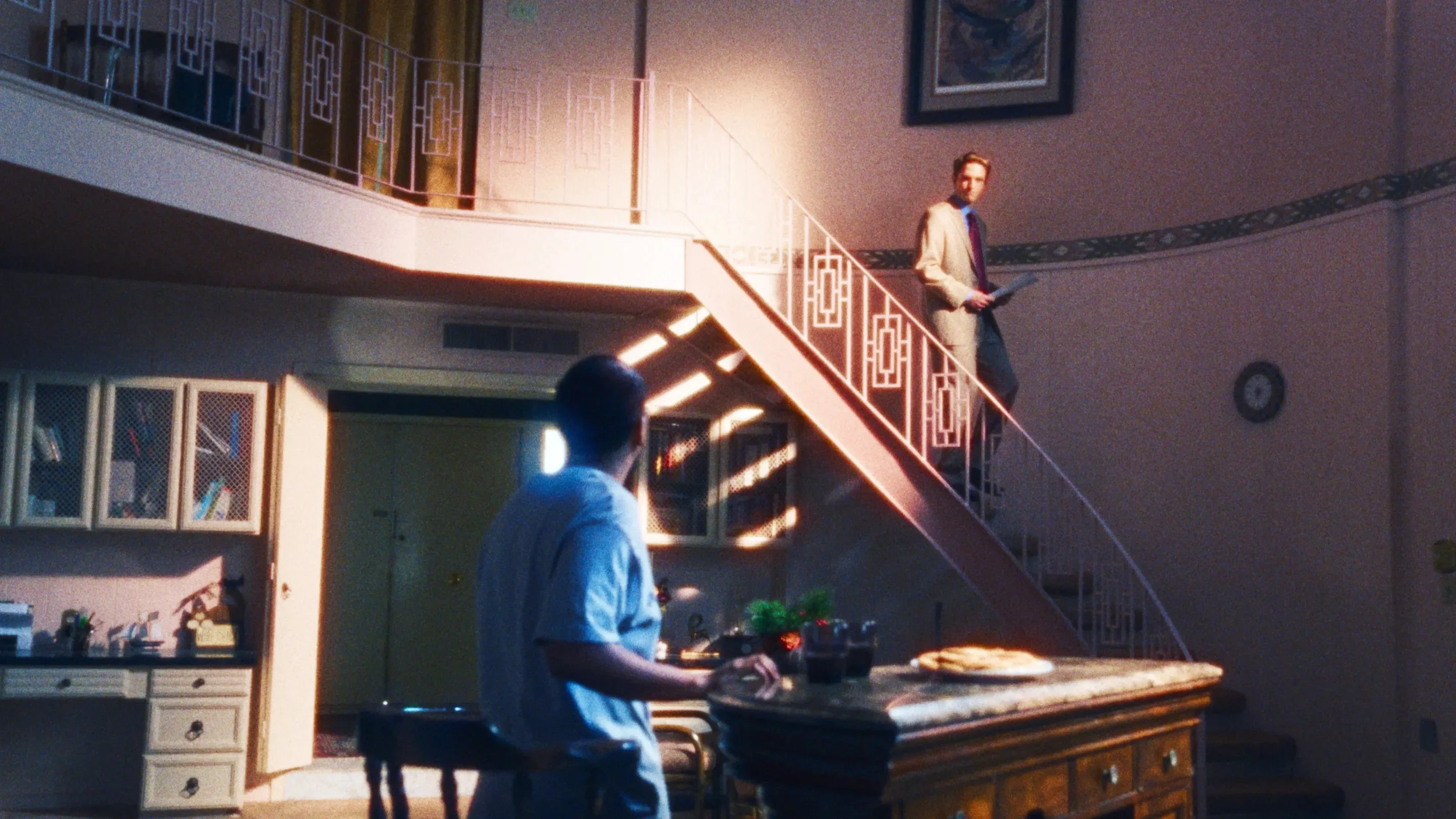
To Catch a Predator wasn't beautiful television. It was hidden-camera reality programming made in an era when small digital cameras didn't produce particularly attractive images. The footage was flat, harsh and frequently ugly. Cinematographer David Bolen and director Lance Oppenheim don't try to make Primetime conventionally beautiful either.
They make it feel sick. Faces fill the frame until your sense of personal space disappears. Highlights blow out. Skin looks clammy. Darkness swallows parts of the image. Colors occasionally smear and separate. Some footage looks as though the camera itself might be malfunctioning.
That isn't an accident.
The production used a huge assortment of formats, including modern Alexa cameras, Panasonic DV cameras similar to those associated with mid-2000s digital video, and old three-tube Ikegami broadcast cameras from the 1980s. Those Ikegami cameras contain separate red, green and blue image tubes that deteriorate with age. As those tubes decay, the image becomes unstable. Oppenheim and Bolen use that instability when the movie pushes deeper into Hansen's increasingly subjective worldview. Even the modern footage was deliberately distressed. Bolen shot the Alexa 35 at an extremely high exposure index to introduce noise and then transferred that footage to 16mm film to add even more texture.
The result is one of the most visually uncomfortable movies I've seen this year. It doesn't simply recreate bad television. It makes the image itself feel infected by what everyone is doing.
2. Primetime Slowly Becomes a Horror Movie
One of the biggest surprises for me was how often Primetime feels like horror. Not because of the obvious subject matter, but because Oppenheim starts using the language of horror movies.
Hansen describes an encounter in India where he believes he experienced something resembling the literal manifestation of evil. Once that idea enters the movie, it starts following him. The lighting becomes more expressionistic. The score becomes increasingly sinister. At one point Hansen appears behind Andie through flashes of light like Michael Myers materializing in a room. By the final stretch, parts of the movie feel closer to Zodiac or Manhunter than a traditional media biopic.
That's what makes Hansen increasingly interesting as a character.
Is he simply a man pursuing evil? Or does spending every day staring at the worst impulses of other people eventually change the person doing the looking? The movie never needs to answer that literally. The horror imagery does the work.
1. Robert Pattinson Disappears Into Chris Hansen
Robert Pattinson has become one of the most interesting movie stars working because he seems increasingly uninterested in protecting the idea of Robert Pattinson.
Primetime may be one of his strangest transformations.
The voice is the obvious part. Hansen has an incredibly specific cadence, and Pattinson gets close enough that there are moments where you could close your eyes and know exactly who he's playing. But the performance goes further than imitation. Pattinson is actually playing two Chris Hansens. There's the man behind the camera. And then there's the television personality who activates once the lights turn on. Watch the posture. Watch his face. Listen to the voice.
Hansen becomes more controlled and authoritative once he's performing for television. Some of my favorite moments involve him practicing lines before a target enters the house because you can see the television persona being constructed in real time. Pattinson originally became involved with Primetime as a producer before ultimately deciding to play Hansen himself, and he's talked about walking around listening to Hansen's podcast and repeatedly practicing that voice. Which must have been an extremely strange thing for anyone walking near Robert Pattinson to overhear. It's exaggerated. It's weird. It's occasionally funny. It's deeply uncomfortable.
And I think Pattinson is fantastic.
Who Should Watch Primetime?
Watch Primetime if you like movies about media, institutions and the uncomfortable relationship between the people creating entertainment and the people consuming it.
Especially if you like:
Nightcrawler
Network
Natural Born Killers
Zodiac
Manhunter
true-crime stories that question the ethics of telling the story
movies where cinematography becomes part of the psychology
Robert Pattinson performances where he completely changes himself
If you're expecting a straightforward Chris Hansen biopic, this probably isn't that movie.
It's substantially dramatized and much more interested in the cultural machinery around Hansen than giving you a documentary history of To Catch a Predator.
Where to Watch Primetime
As of October 2026, Primetime is still playing in theaters.
A24 is also accepting digital preorders through Apple TV, Amazon and Fandango.
No official A24 4K UHD or Blu-ray release has been announced yet. I'll update this page when legitimate physical-media information becomes available.
Prefer to Listen?
Primetime on the Force Five Top 5 Radar
There are two future Force Five lists where I could easily see Primetime showing up.
Top 5 Biographical Movies Focused on One Chapter
Primetime isn't interested in explaining Chris Hansen's entire life.
It focuses on one specific period when To Catch a Predator became a cultural phenomenon and uses that window to explore something much larger.
That puts it in conversation with movies like Steve Jobs, Capote, Hitchcock and Frost/Nixon - biographical films that understand you don't necessarily need someone's entire life story to understand something essential about them.
Top 5 Movie Moments You Knew Would Become Memes
Sometimes you see a moment in a movie and immediately know the internet is going to grab it.
Leo pointing at the television in Once Upon a Time in Hollywood. Matthew McConaughey pounding his chest in The Wolf of Wall Street. Primetime has at least one of those moments, and possibly more than one.
More Force Five
Digger (2026)
Another ambitious 2026 satire about powerful institutions, storytelling, hypocrisy and the uncomfortable role of the audience.
https://www.forcefivepodcast.com/episodes/digger-review-2026
Tenet (2020)
More Robert Pattinson: revisit my archived Tenet review, where Pattinson’s Neil was one of the film’s biggest highlights.
https://www.forcefivepodcast.com/blog/tenet-2020
Top 5 Directorial Debuts
Lance Oppenheim makes his narrative-feature debut with Primetime. Revisit this Force Five discussion about filmmakers who made an immediate impact with their first movie.
https://www.forcefivepodcast.com/episodes/top-5-directorial-debuts
Browse More Force Five Movie Recommendations
Find more new releases, cult favorites, overlooked movies and deep cuts worth putting on your watchlist.
