I've seen some pretty ridiculous creature features over the years, but I don't think I've seen anything quite like Hope.
Directed by Na Hong-jin, the filmmaker behind The Chaser and The Wailing, Hope (2026) is a massive Korean science-fiction horror movie that starts with a mysterious animal attack in a remote coastal village and gradually transforms into something considerably bigger, stranger and more violent.
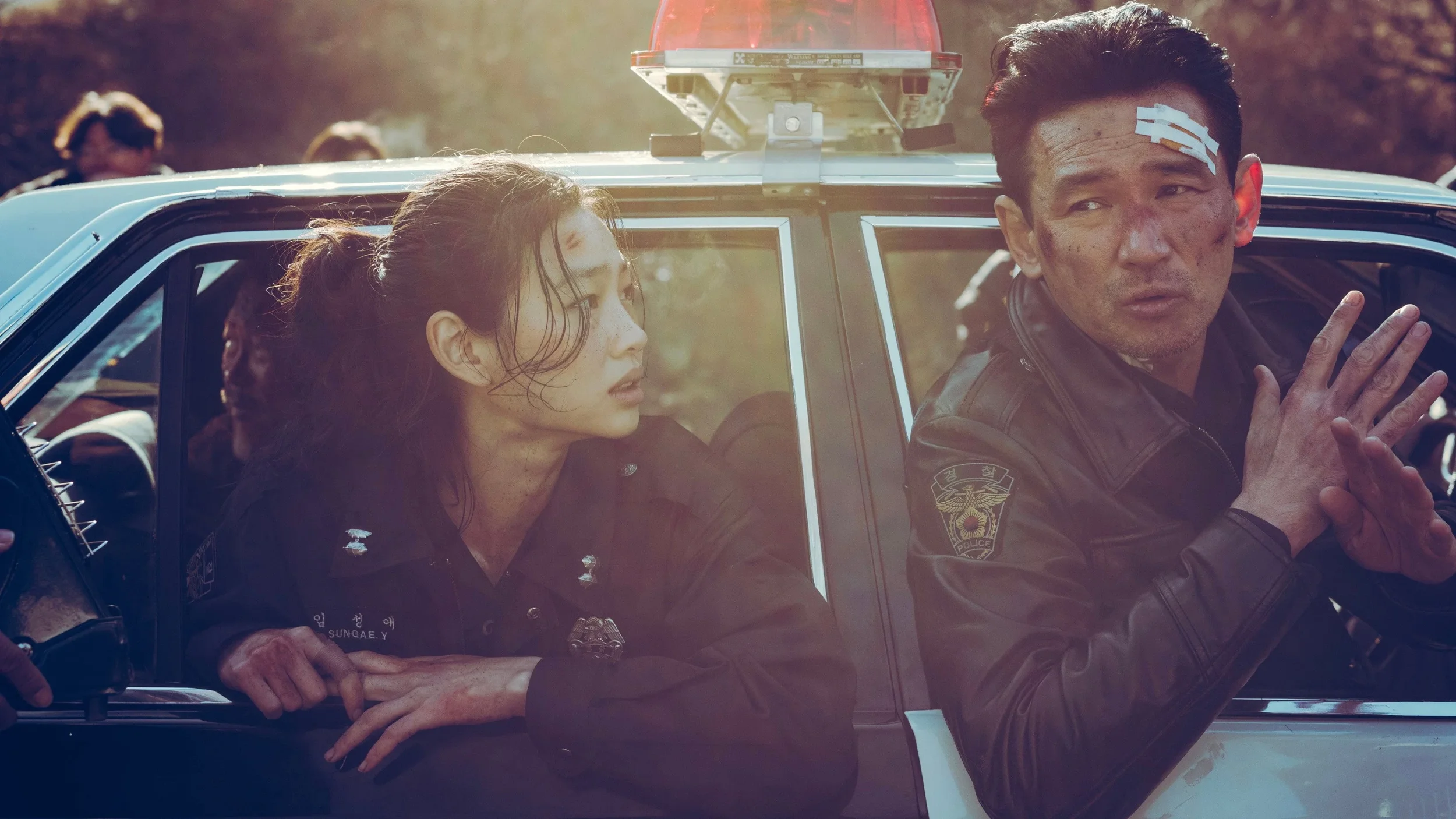
Hwang Jung-min stars as Bum-seok, the local police chief investigating the creature, while Hoyeon plays Sung-ae, a police officer who quickly becomes one of the most entertaining characters in the movie. Zo In-sung, Michael Fassbender, Alicia Vikander, Taylor Russell and Cameron Britton round out an unusually impressive international cast.
I have some pretty significant complaints about the CGI, but there's also an incredible amount to appreciate here.
Here are five reasons you might want to watch Hope.
Watch the Hope Video
5 Reasons to Watch Hope
#5: It's a Creature Feature That Knows How to Build Suspense
If you like creature features, Hope should absolutely be on your radar.
The movie begins with a group of men discovering a mutilated cow in the road. Whatever killed it was clearly large, powerful and not particularly interested in being friendly.
When police chief Bum-seok returns to town, he discovers that the creature has already made its way into Hope Harbor, and things have gotten considerably worse.
Now, I want to be upfront about something: I think some of the CGI in this movie looks terrible.
There are moments when the digital creatures look like something from a PlayStation 3 cutscene, which is especially frustrating because so much of the surrounding movie looks incredible.
But what the visual effects occasionally lack in polish, the filmmaking makes up for in suspense.
There's an early sequence where Bum-seok moves through the damaged village searching for whatever has been attacking people, and it's a wonderful example of how effective monster movies can be when they don't immediately show you everything.
It reminded me of the approach Steven Spielberg took with Jaws. The anticipation becomes just as frightening as the monster itself because you're constantly waiting for something terrible to appear.
There's also a little Tremors, some Predator, a healthy dose of Bong Joon-ho's The Host and even a bit of Nope in the mixture.
The creature designs are varied and imaginative, even when the effects don't always convince me that these things occupy the same physical space as the actors.
And once the movie gets going, it certainly isn't interested in slowing down.
#4: Hoyeon Is an Absolute Badass
One of the highlights of Hope is Hoyeon as police officer Sung-ae.
If you watched the first season of Squid Game, you'll probably recognize her immediately, although this is a very different kind of role.
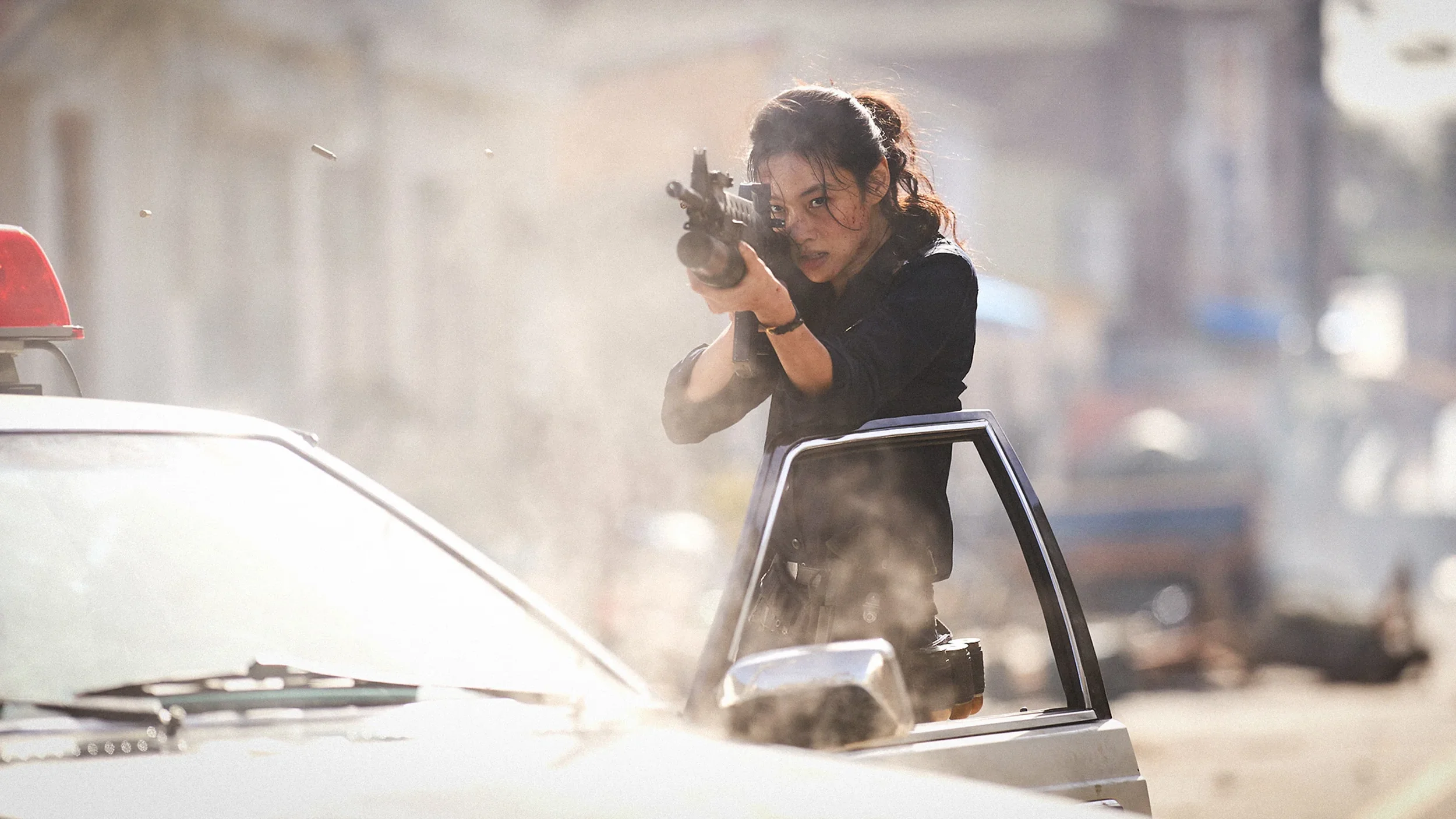
Sung-ae makes one hell of an entrance, flying into the story behind the wheel of a police car and jumping out ready to confront a situation that most reasonable people would immediately run away from.
She's funny, aggressive, reckless and surprisingly capable. In a movie where nearly everybody is trying to figure out what the hell is happening, she feels like one of the few characters who might actually survive through sheer determination.
What makes the performance even more impressive is how much preparation Hoyeon put into it.
In an interview with RogerEbert.com, she explained that she spent six months preparing physically for the movie, building muscle, improving her stamina and practicing firearms handling. She wanted to make sure she could keep up with the demanding action sequences rather than become the first member of the cast to run out of energy.
And it shows.
There's a physical confidence to the performance that makes Sung-ae convincing even when the things happening around her become completely absurd. She's not simply standing around reacting to monsters. She's driving, fighting and making dangerous decisions that keep pushing the movie forward.
I wouldn't be surprised if a lot of people come away from Hope with a brand-new favorite action heroine.
#3: Michael Abels Delivers an Absolutely Massive Score
I love a good, aggressive movie score.
Sometimes I want subtle music that sits quietly underneath the drama, and sometimes I want a composer to grab me by the shoulders and make absolutely certain I understand that something important is happening.
Michael Abels takes the second approach with Hope.
Abels previously composed the scores for Jordan Peele's Get Out, Us and Nope, but Hope gives him an opportunity to work on an entirely different scale.
The music is enormous.
It pushes the action forward with a combination of orchestral power, pounding rhythms and an almost overwhelming sense of momentum. When the movie launches into another ridiculous chase or enormous action sequence, Abels makes sure you feel every second of it.
The sound design is terrific too. Gunfire, explosions, engines and the movement of these enormous creatures all have the kind of physical impact that makes you wish you'd watched the movie with the biggest possible sound system.
There's a particularly intense sequence involving a vehicle desperately trying to escape a pursuing creature, and Abels' music ratchets up the tension beautifully.
If you like the overwhelming sound of Nope, Jóhann Jóhannsson's Sicario score or Hans Zimmer when he's working in full blockbuster mode, there's a lot to enjoy here.
The soundtrack was released through Milan Records in September 2026, so you can appreciate Abels' work independently of the movie.
I highly recommend giving it a listen with some decent speakers.
#2: The Production Design Is Absolutely Incredible
One of the things that impressed me most about Hope was how convincing its world felt.
The town of Hope Harbor isn't some anonymous collection of computer-generated buildings. It feels like an actual community where people have been living and working for decades.
That makes what happens to it considerably more effective.
Roofs are torn apart, buildings are smashed open, streets are covered in wreckage and the aftermath of the creature attacks can be genuinely unsettling.
Production designer Lee Hwok-young and cinematographer Hong Kyung-pyo, whose previous work includes Parasite and Burning, make the location feel authentic even after it has been thoroughly destroyed.
And there was an interesting logistical challenge behind those scenes.
Na Hong-jin explained that the real village used for filming was an important center for processing and distributing salted cabbage used in kimchi. The production had to coordinate its schedule around the local agricultural business rather than simply take over the town indefinitely.
According to Na, the filmmakers shot the destruction across separate periods, first with the town partially damaged and later with it completely devastated.
That kind of production planning gives the destruction an enormous amount of physical credibility.
The resulting imagery reminded me of the urban devastation in Children of Men, War of the Worlds and Black Hawk Down, although Hope has a collection of creatures making the situation significantly worse.
I don't know whether the film will receive major recognition for its production design, but I think it deserves serious consideration.
Even when the CGI isn't working, the environment surrounding it is spectacular.
#1: Na Hong-jin Knows How to Stage Gigantic Action Sequences
If you enjoy directors who understand how to shoot action, this is the biggest reason to watch Hope.
Na Hong-jin goes absolutely enormous with this movie.
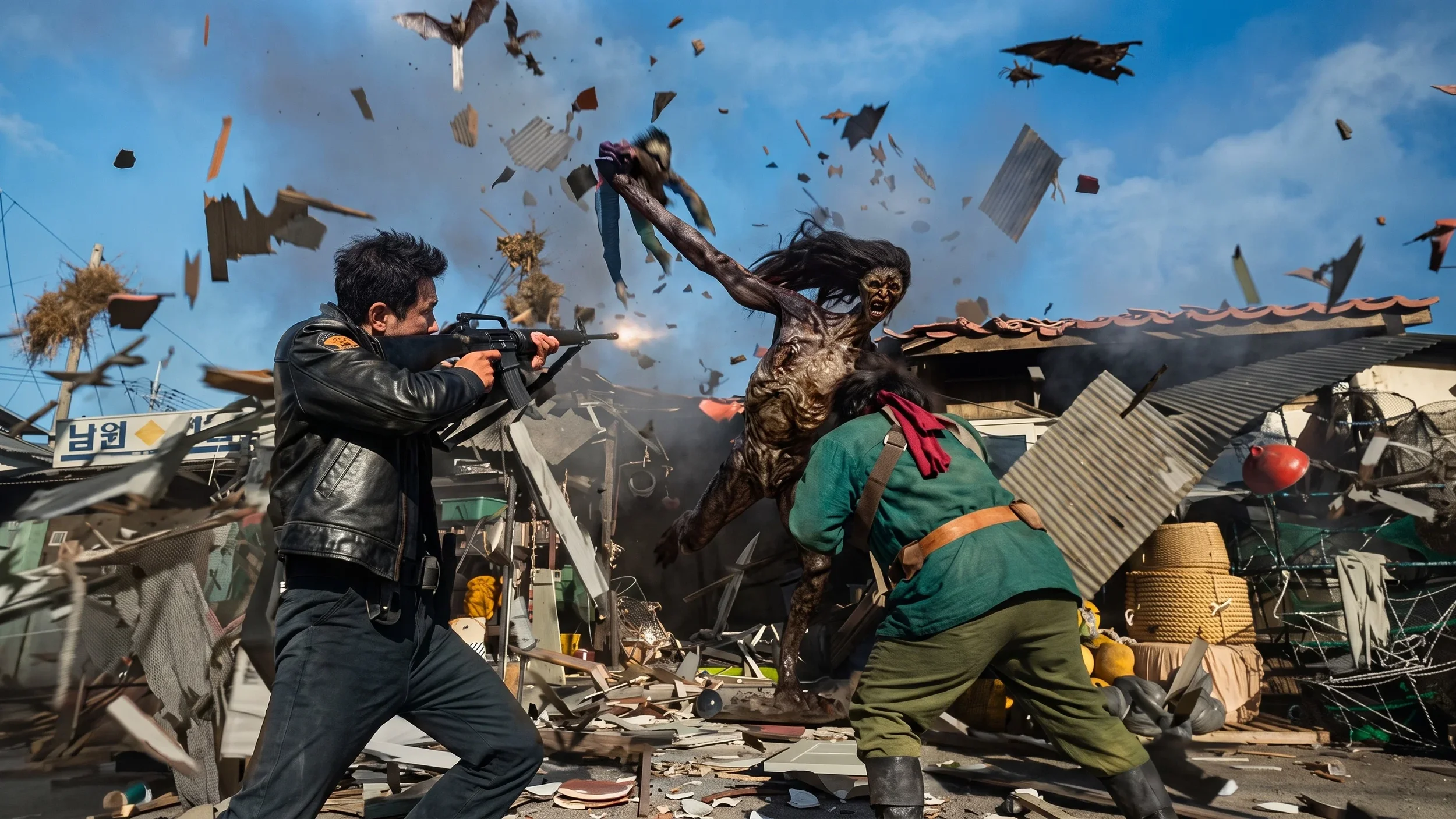
There are vehicle chases, horseback sequences, flying objects, explosions, buildings collapsing and characters running in every direction while creatures cause increasingly ridiculous amounts of destruction.
At times, it feels like Na watched a Michael Bay movie and decided he wanted to see what would happen if he applied that level of spectacle to a Korean creature feature.
But what makes the action impressive isn't simply the size of the explosions.
It's the geography.
Even when there are cars, horses, creatures and people moving simultaneously, I usually understand where everybody is and what they're trying to accomplish.
That is a lot harder than it looks.
In an interview with TheWrap, Na explained that he incorporates the practical details of his action sequences directly into his screenplays. He described the writing process as creating something resembling a floor plan, with the eventual shots and staging already taking shape before filming begins.
He also spends an enormous amount of time storyboarding, mentally organizing the sequences until he knows how the finished scene should work.
You can see that preparation on screen.
The first major action sequence in Hope Harbor is fantastic, but the movie keeps finding new ways to increase the scale, eventually delivering an extended finale that feels like it might never stop.
Does the movie occasionally go too far? Absolutely.
Would I have preferred more convincing digital effects? Without question.
But it's difficult to watch Hope and not appreciate the sheer ambition behind it.
This is an enormous, strange and frequently exhilarating movie made by somebody who clearly takes the craft of action filmmaking seriously.
And that's more than enough reason for me to recommend giving it a look.
Who Should Watch Hope?
Hope is an easy recommendation for people who enjoy ambitious creature features, Korean genre cinema and enormous action movies that aren't afraid to become completely ridiculous.
If you love The Host, Predator, Tremors, Jaws, Nope or War of the Worlds, you'll recognize plenty of familiar ingredients. Na Hong-jin puts them together in ways that feel distinctly his own, creating a movie that is part monster hunt, part alien-invasion thriller and part exercise in seeing just how much chaos one small village can survive.
It's also worth checking out if you're a fan of Hoyeon, Michael Abels or beautifully staged action sequences.
Just be prepared for some uneven visual effects, graphic violence and a movie that takes several unexpected turns.
Where to Watch Hope (2026)
Hope opened in U.S. theaters through NEON on September 9, 2026 and became available digitally on October 13.
It's currently available to rent or purchase in the United States through services including Amazon Prime Video, Apple TV and Fandango at Home. A U.S. subscription-streaming option hasn't been confirmed.
Check current streaming and rental options for Hope
Own Hope on Blu-ray
NEON is also offering Hope on Blu-ray, with a high-definition presentation, Dolby Atmos audio and bonus material that includes behind-the-scenes features and interviews with Na Hong-jin.
Pre-order Hope on Blu-ray from NEON
If you enjoyed the movie's scale and intricate production design, this is the sort of title that deserves a place in a physical-media collection.
Prefer to Listen?
You can also hear this Force Five recommendation as a podcast episode covering the same five reasons you might enjoy Hope, including its monster-movie suspense, Hoyeon's performance, Michael Abels' score, the incredible production design and Na Hong-jin's ambitious action filmmaking.
Hope on the Force Five Top 5 Radar
Top 5 Scenes Where a Character Tells a Story
Sometimes a character can spend several minutes doing nothing but describing something that happened, and the scene becomes one of the most memorable parts of the movie.
Think Christopher Walken telling the story of the gold watch in Pulp Fiction or Quint recounting the sinking of the USS Indianapolis in Jaws.
Hope has its own wonderful example involving a character describing an earlier encounter with the mysterious creatures.
I won't spoil the details because a huge part of the enjoyment comes from hearing the story unfold, but it was one of the funniest scenes I watched all year.
Na Hong-jin has said that this sequence was among the earliest ideas developed for the film, which makes it even more interesting that such a comparatively simple moment survived inside an otherwise enormous production.
Top 5 Creepiest Character Houses
There's a scene in Hope where Bum-seok visits a carpenter's house to investigate something stored in a freezer.
The interior looks like a place where a serial killer might wander in, take one look around and decide to leave.
Dead animals hang from the ceiling, mannequins occupy disturbing positions and seemingly every available surface contains another unsettling object.
It's one of those sets I'd love to explore frame by frame because I'm convinced there's an incredible amount of detail the camera doesn't give us enough time to appreciate.
That house deserves consideration alongside some of the creepiest homes in movies like The Texas Chain Saw Massacre, Psycho and The Silence of the Lambs.
More Force Five
If the combination of creatures, human survival and enormous spectacle worked for you in Hope, Force Five's review of The End of Oak Street (2026) is a great next stop. David Robert Mitchell's sci-fi adventure takes an ordinary suburban neighborhood and transports it into a prehistoric world filled with dinosaurs. It's a very different kind of creature feature, but both movies understand how much more frightening monsters become when the places surrounding them feel completely ordinary.
For another recent action-horror movie with memorable monsters and a director determined to deliver as much chaos as possible, check out Onslaught (2026). Adam Wingard's grindhouse-inspired thriller replaces alien creatures with genetically engineered super-soldiers, but it shares Hope's enthusiasm for extended action sequences, ridiculous violence and wonderfully dangerous antagonists.
If the more extreme horror elements were your favorite part, Ghost in the Cell (2026) offers another example of contemporary Asian genre filmmaking pushing familiar ideas into much stranger territory. Joko Anwar's Indonesian prison horror comedy combines supernatural terror, political satire and some of the most elaborate deaths of the year. It's smaller in scale than Hope, but just as enthusiastic about surprising its audience.
And if you particularly enjoy filmmakers experimenting with unconventional creatures, V/H/S/Mixtape (2026) offers several entirely different varieties of monsters and mayhem. The anthology format makes for a much less cohesive experience than Na Hong-jin's epic, but it similarly rewards viewers who enjoy not knowing exactly what sort of nightmare they're about to encounter next.